
How to Take Photos During a Weekly Church Service (Without Being a Distraction)

Church photography seems simple until you’re behind the camera, trying to capture moments without drawing attention from what matters most.
If you’ve felt that tension (serving without being “in the way”), you’re not alone. Great church photography is about moving with wisdom, respect, and presence, while also finding the perfect shot.
Drawing on the collective experience of seasoned church photographers from Texas, Alabama, and Olympia, here are practical, encouraging ways to take better photos during a weekly service while building trust with your church community.
1) It Starts With Leadership Support
Before you worry about settings, lenses, or editing, start with alignment.
When leadership values visual storytelling, photography becomes ministry rather than interruption. Without support, photographers may feel they must constantly justify their presence. If your pastors or leaders aren’t fully on board yet, don’t push defensively; invite them into a shared vision. Explain that photography helps:
Tell the story of what God is doing in and throughout the church.
Celebrate people, community, and worship.
Communicate the mission to those who aren’t in the room yet.
2) Use Equipment That Helps You Stay Discreet
Your gear can help you blend in or accidentally make you stand out.
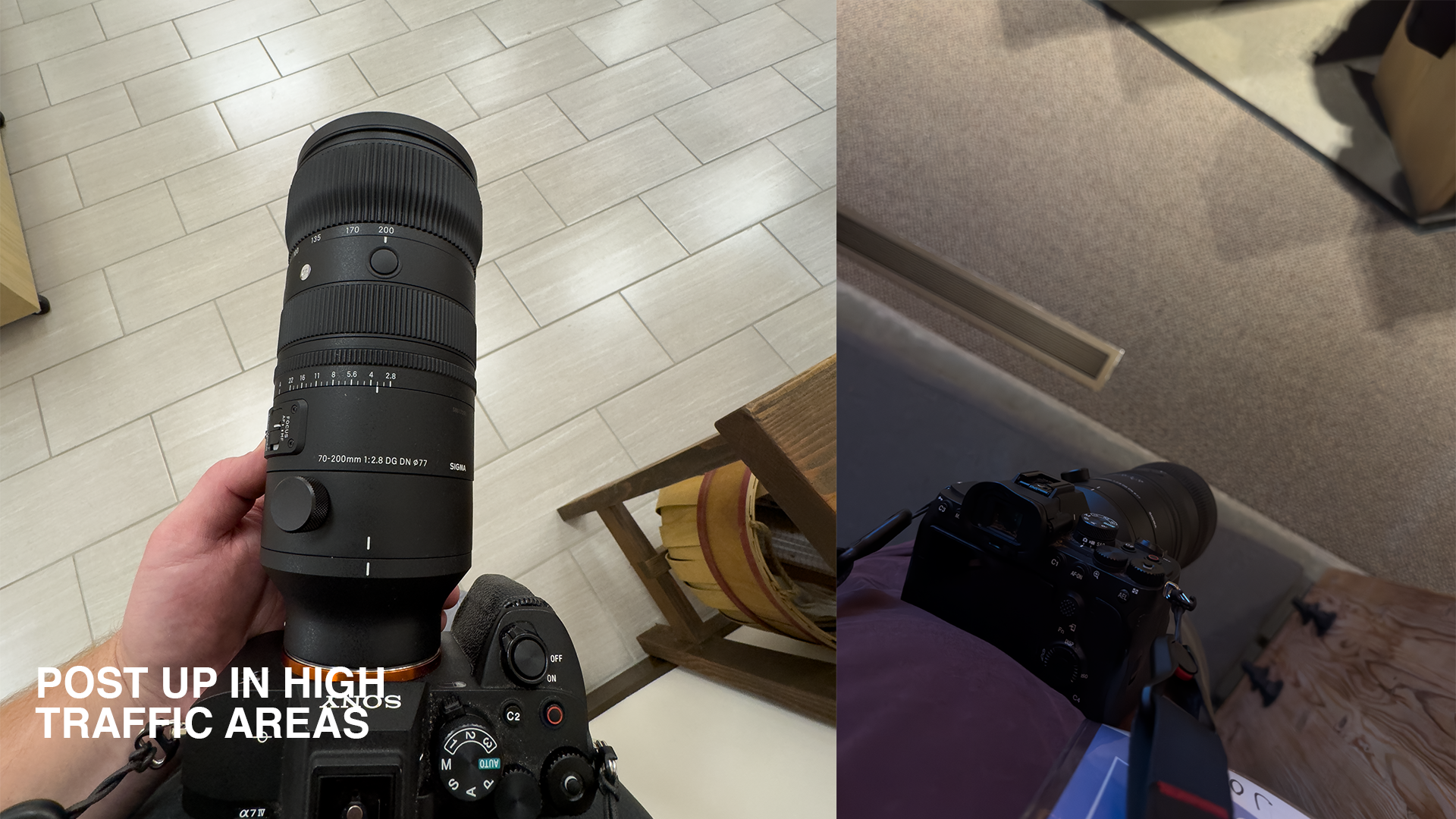
All three photographers I asked recommend a long lens (like 70–200mm) as a church photography workhorse, it lets you capture real moments from a respectful distance.
Use it to shoot from a distance while learning people’s names and rhythms.
Capture candid interactions while respecting comfort and privacy.
Pair a zoom lens with a monopod for stability, especially in busy or moving settings.
3) Learn the Flow of Your Church Spaces
Every church has “moments” built into the architecture. There are places where connection naturally happens: the lobby entrance, coffee stations, kids check-in, hallways between services, and the edges of the sanctuary before worship starts. One approach is to post up in a high-traffic area and let life come to you. Try this: ask yourself, Where do people naturally greet each other? Where do kids light up? Where do volunteers serve? Where do conversations happen every single week? Observe and position yourself where community life naturally unfolds.
4) Build Relationships, Not Just a Gallery
Become a familiar, approachable presence. When people know and trust you as part of the community, not just as the photographer, they relax. Relaxed people make better photos. Here are some simple ways to build trust. Say hi before you start shooting, learn names (even slowly over time), give high-fives, handshakes, and quick encouragement, and treat people like people, not subjects. Personal engagement with the community results in more authentic images.
5) Prioritize Candid Moments Over Posed Shots
Posed photos have a place, but candid moments tell the truth. Find a spot and let moments come to you. Chasing interactions interrupts them; waiting lets you capture them as they happen. Look for: hugs, laughter, prayer, serving moments, kids being kids, worship from the side or back of the room, and greeters connecting naturally. Pro tip: hang around the greeters, but use a long lens to stay discreet.
6) Respond Gracefully When Someone Doesn’t Want Photos
Even in a healthy church culture, not everyone will be comfortable being photographed, and that’s okay. Honor requests immediately. No explanations needed. No frustration. No passive comments. A simple response like: “Absolutely, thank you for letting me know,” goes a long way. Protecting trust is always more valuable than capturing any single photograph.
7) Treat Creativity Like a Gift (Because It Is)
Creativity is a God-given gift. Church photography isn’t extra. It helps people see, celebrate, and feel connected to what’s happening, especially those who: missed a week, are checking out the church online, or want to invite a friend but don’t know how to describe it. Your photos can quietly communicate, “This is a place where you can belong.” You’re not just documenting, you serve by telling the story of God’s work through people, community, worship, and mission.
Final Encouragement
A church photographer’s goal isn’t to take a thousand photos. Prioritize telling the church's story honestly over amassing images. So keep it simple:
Get leadership aligned
Use a gear that lets you stay unobtrusive.
Learn your spaces
Build trust
Watch for a candid connection.
Respect boundaries
Remember, your creativity is a gift.
Start today: apply these steps, share your experience, and encourage others to join you in building your church’s visual story.